Automotive nuts may look like ordinary fasteners, but their production requirements can be quite different. A nut used on a vehicle may need to maintain a specific thread tolerance, withstand vibration, fit accurately with a mating bolt and remain consistent throughout large production batches.
That makes the tapping process an important stage in automotive fastener production.
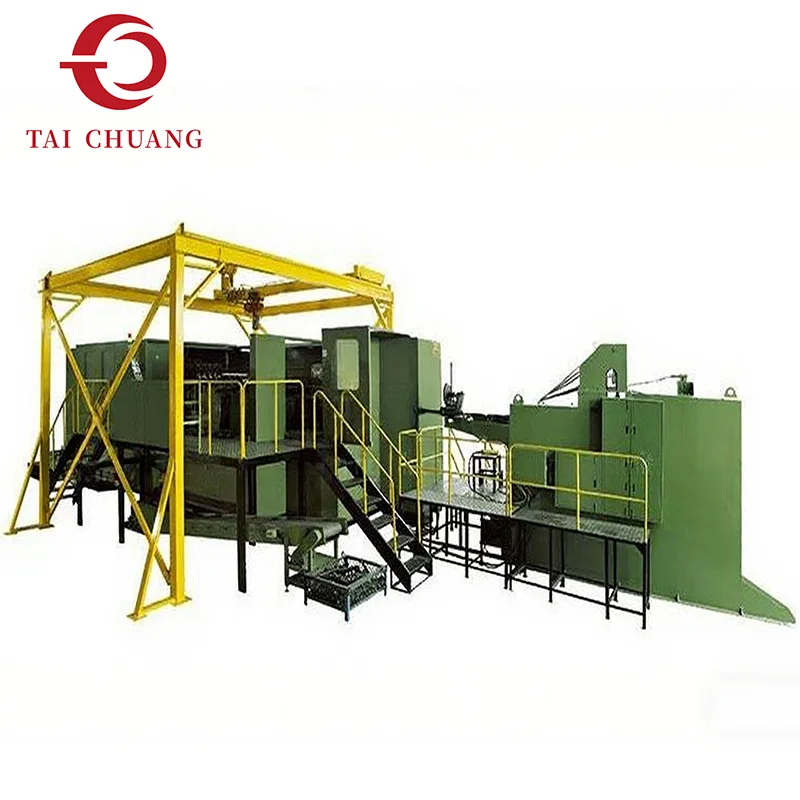
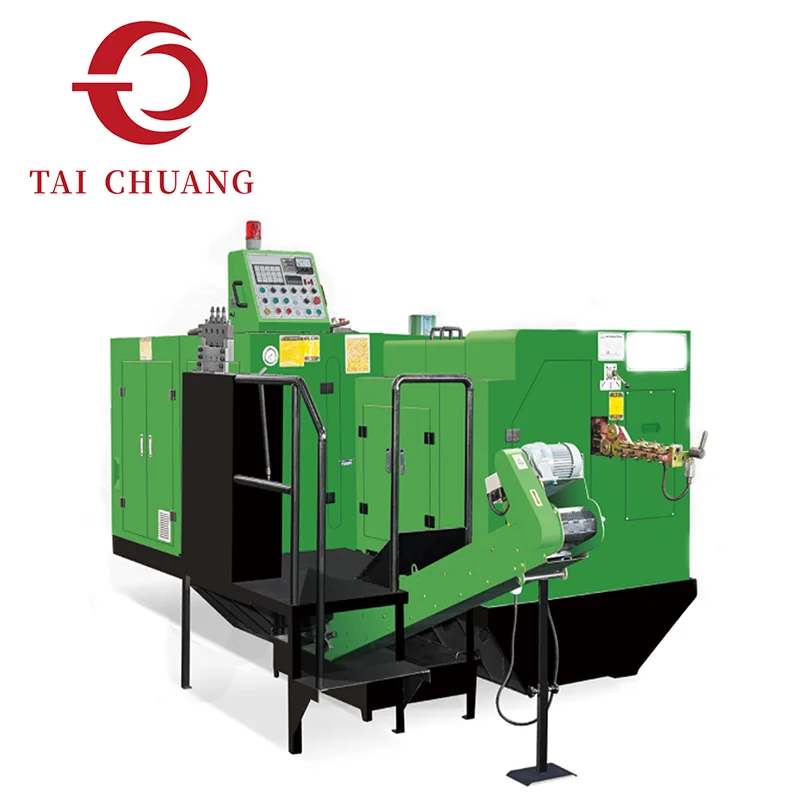
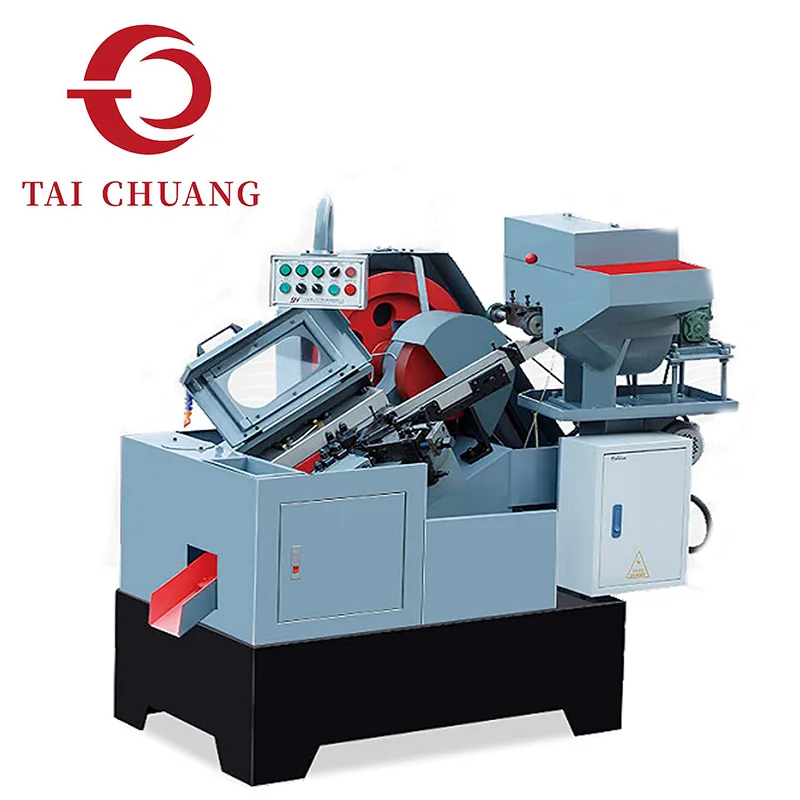
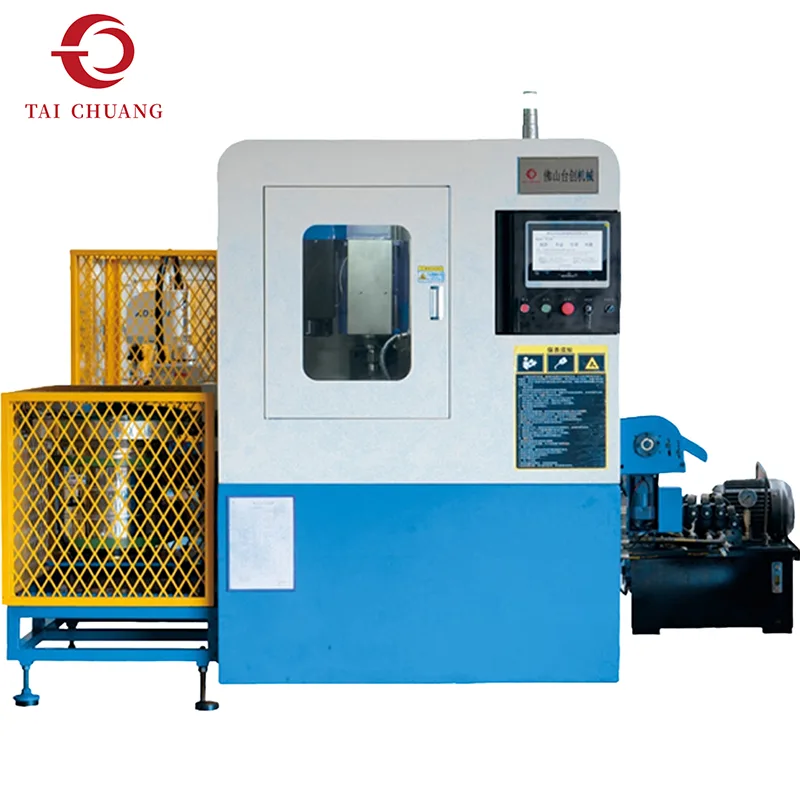
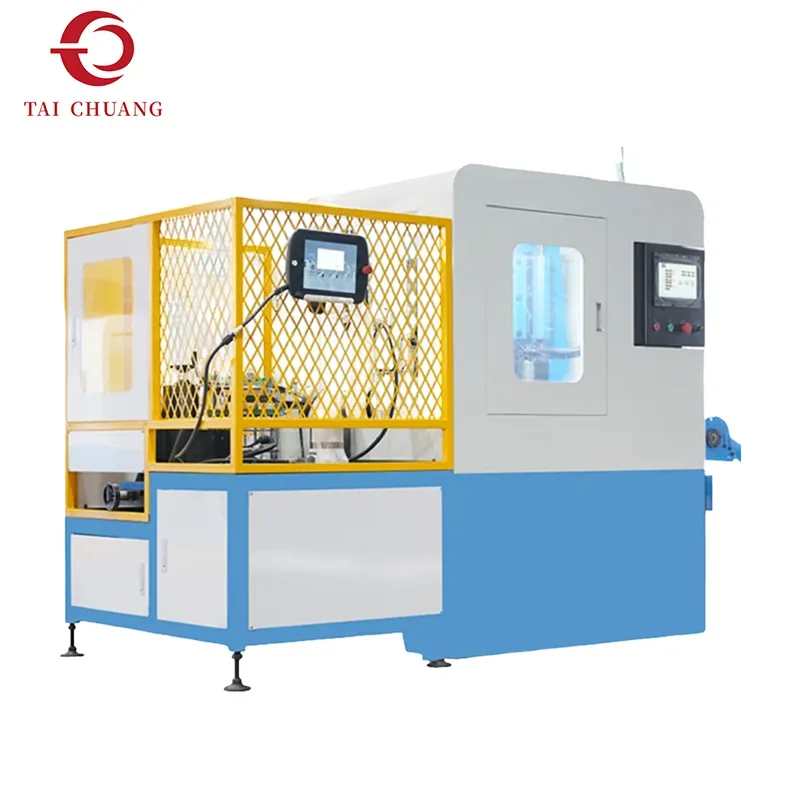
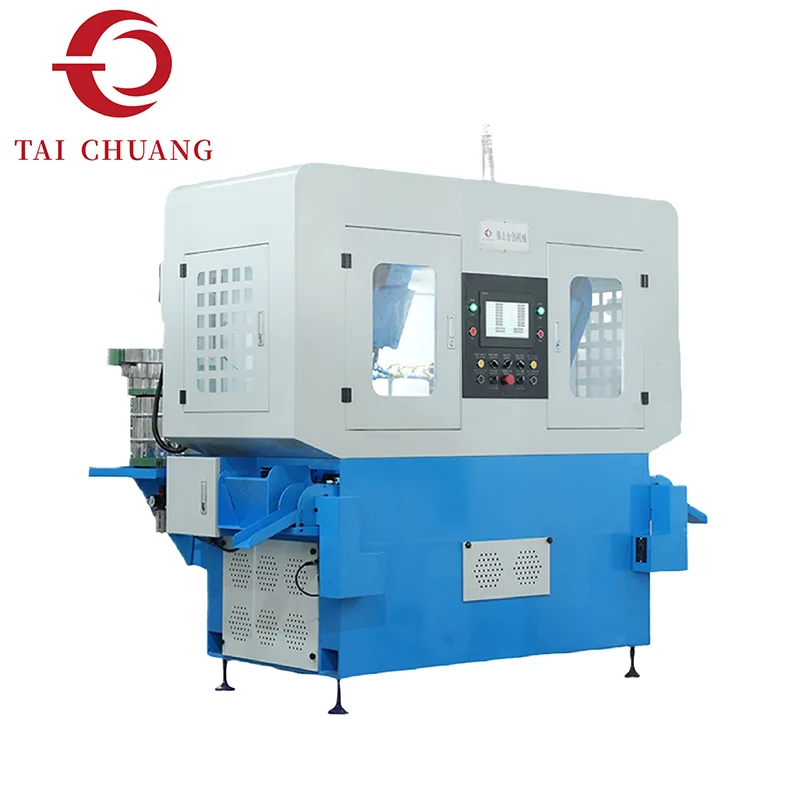
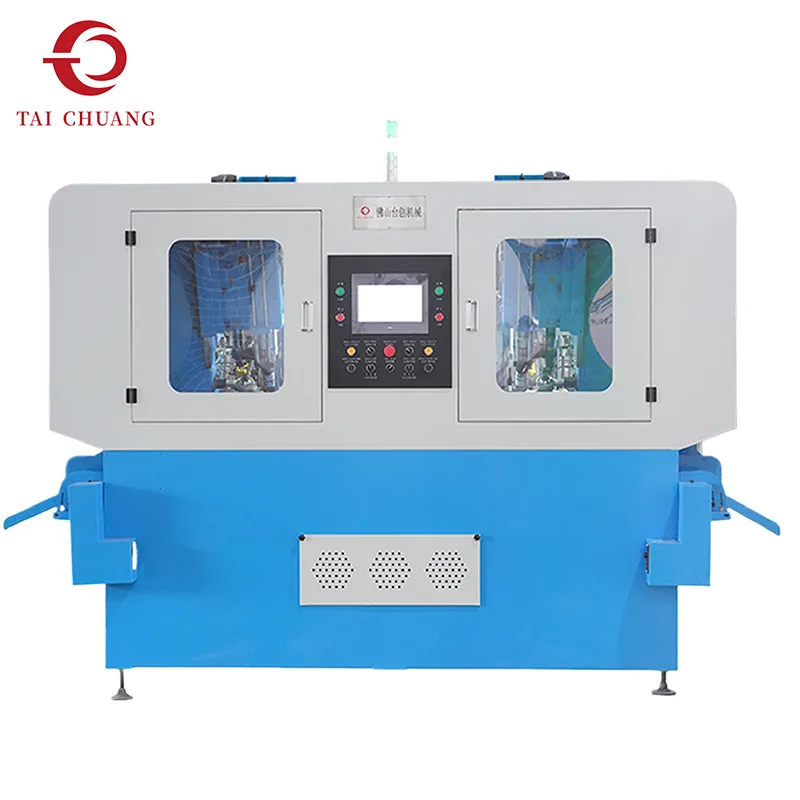
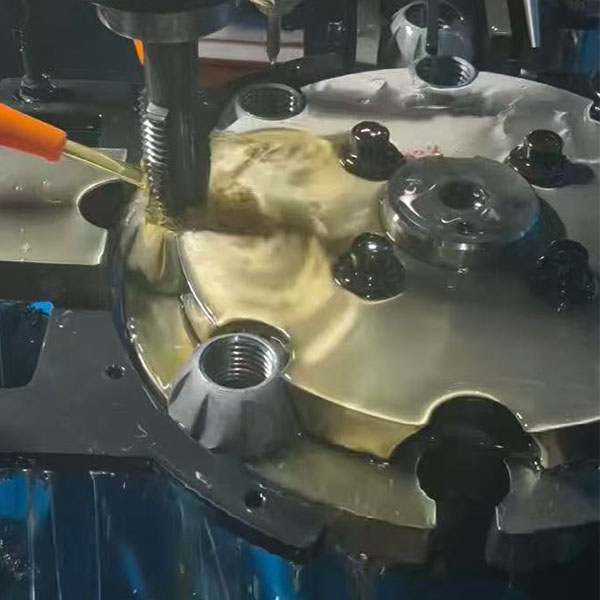
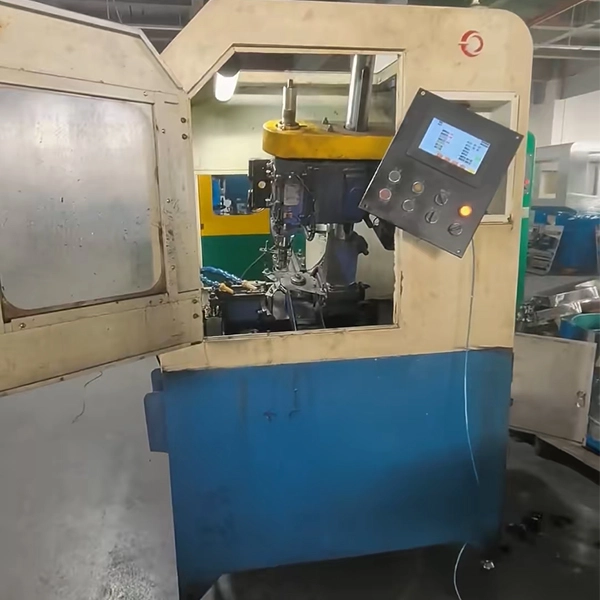
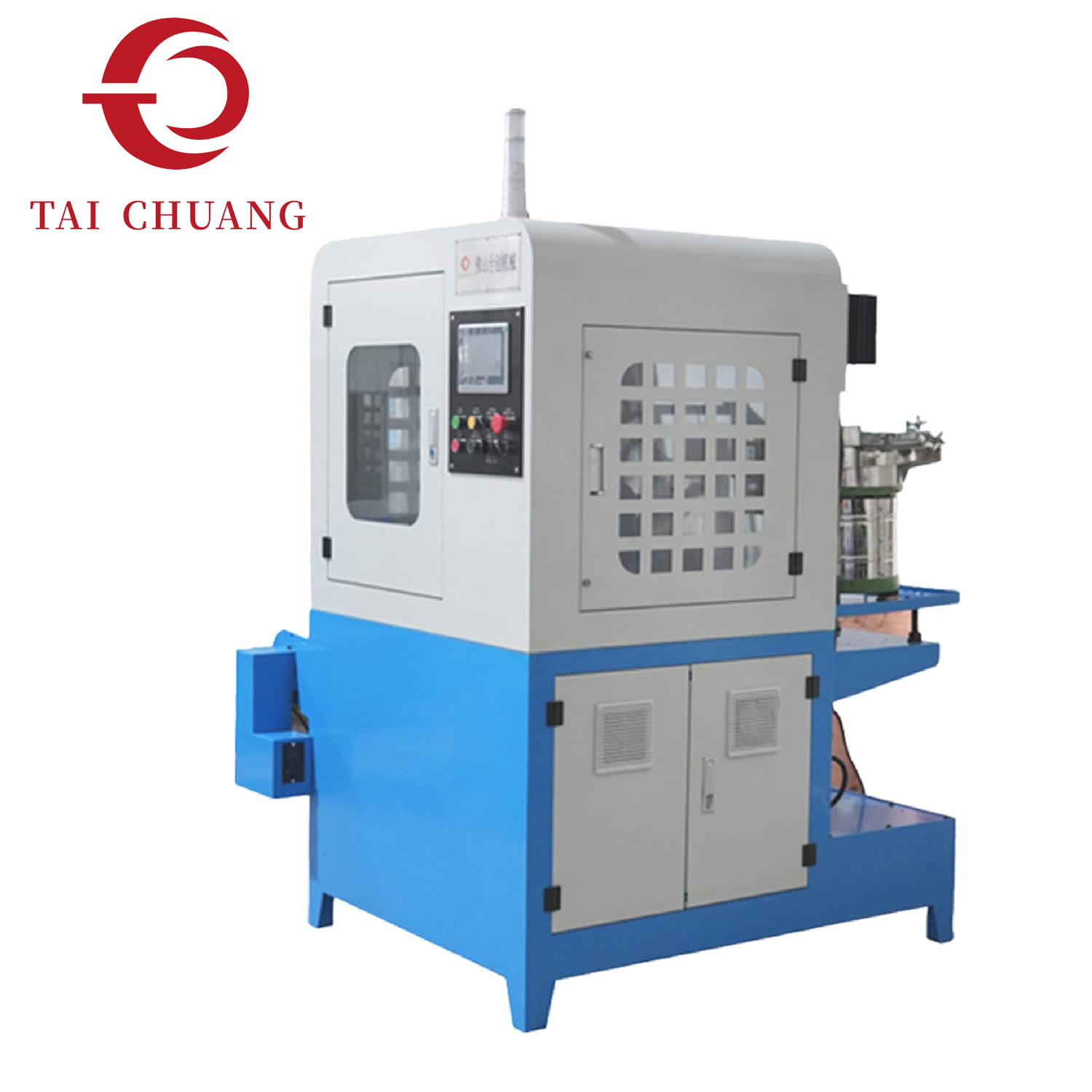
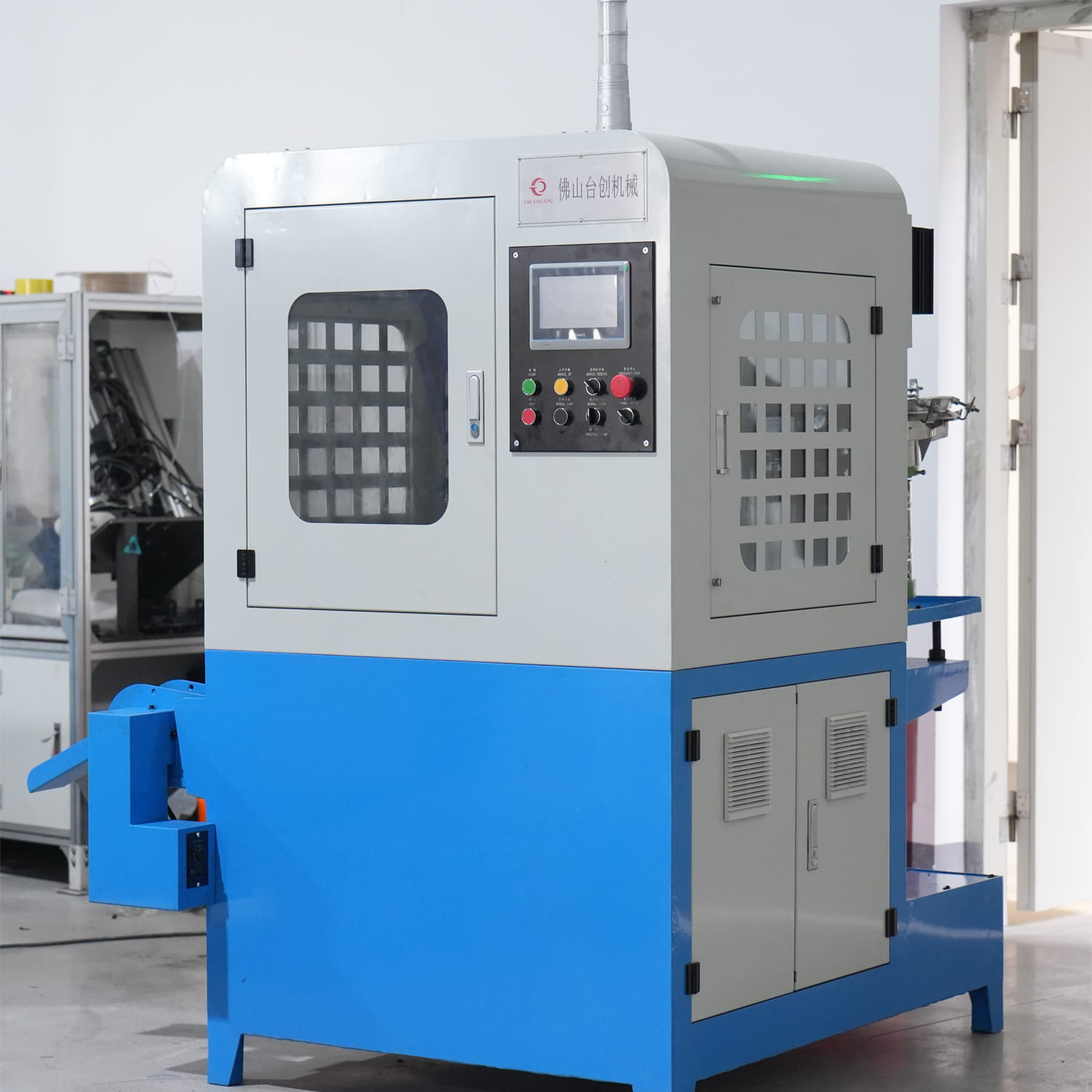
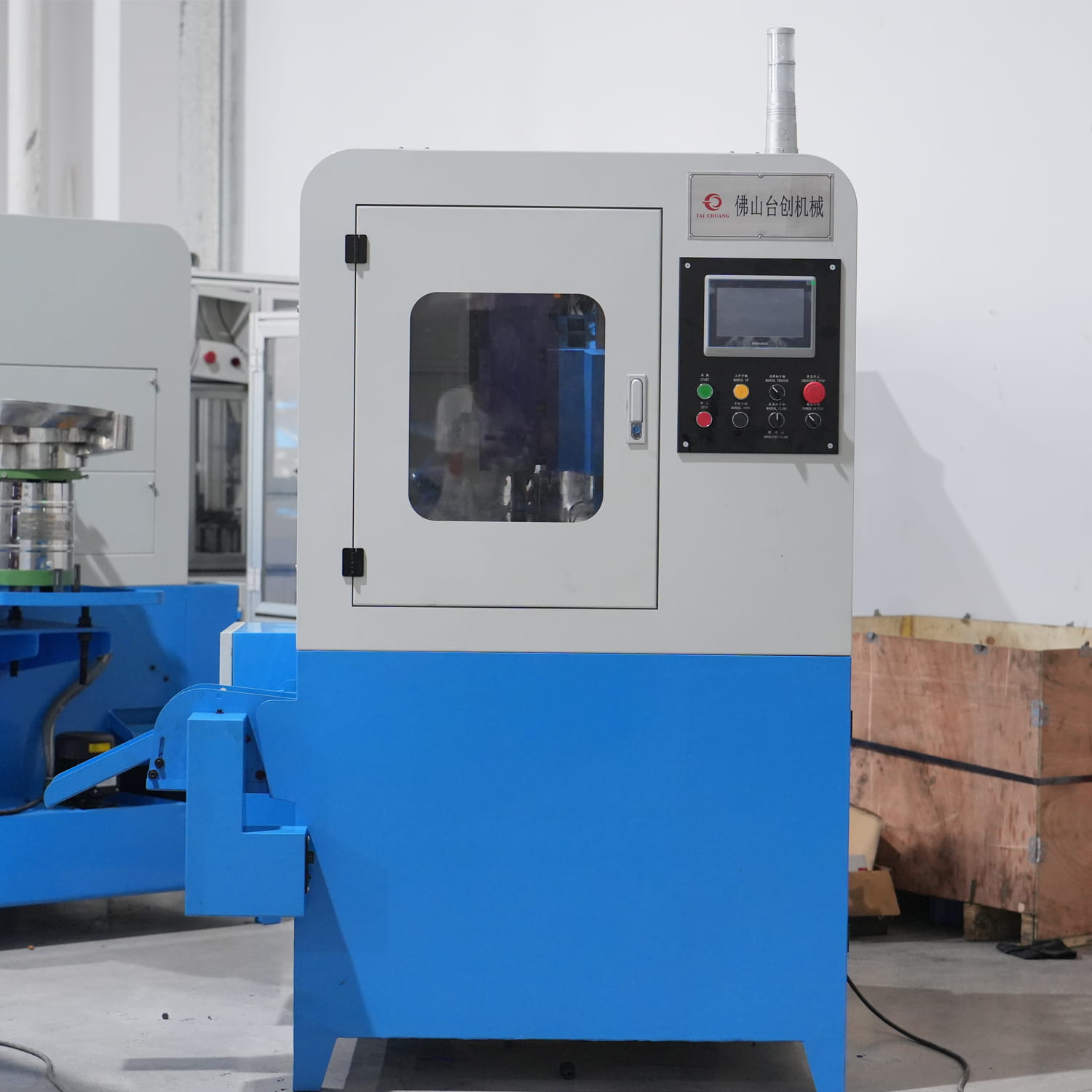
Our Tapping Machine for Automotive Nuts is developed around this type of production requirement. Instead of treating tapping as an isolated manual operation, the machine combines workpiece feeding, positioning, tapping and discharge into a continuous process.
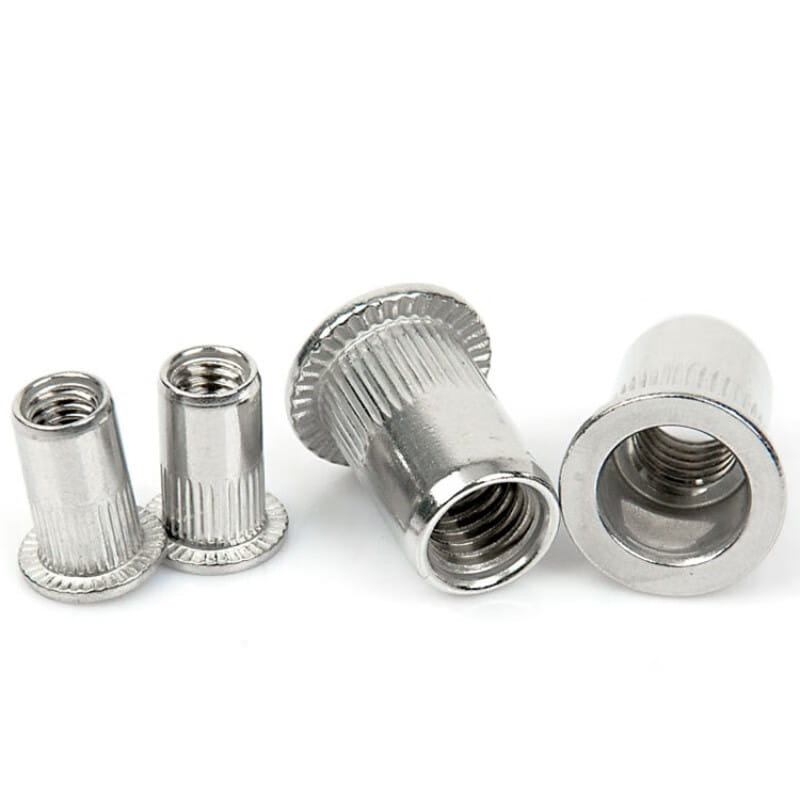
It can be configured for different automotive nut applications, including:
Automotive wheel nuts
Hex flange nuts
Weld nuts
Projection weld nuts
Special automotive nuts
High-strength steel nuts
Small automotive hardware
Non-standard automotive fasteners
The actual configuration depends on the nut drawing, thread specification, material and required production output.
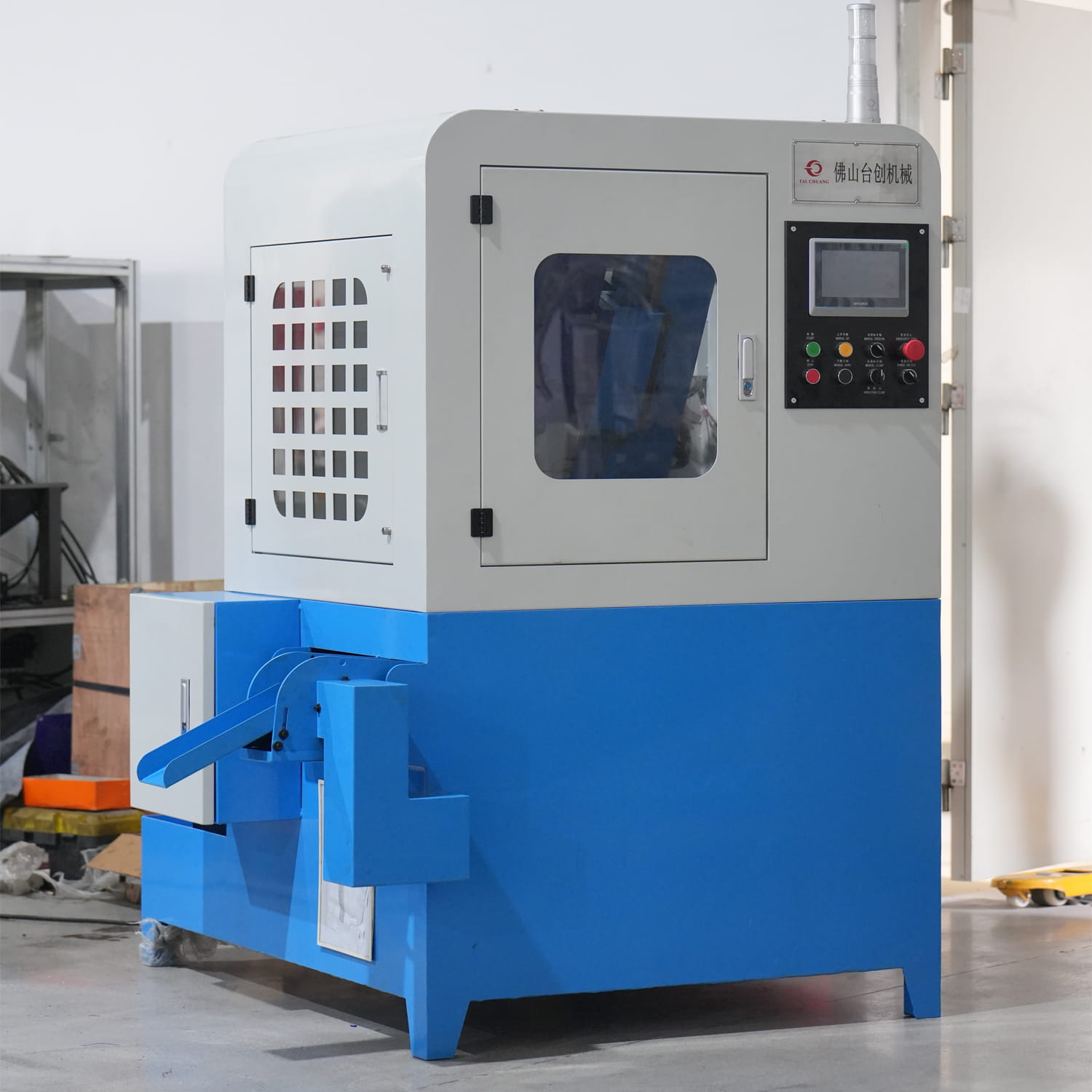
TAICHUANG can provide nut tapping machine from M5-M12,with specifications below:
|
Item |
Name |
Parameter |
Name |
Parameters/Brand |
|
|
Casting base |
Pallet stroke |
0-270mm |
Main spindle servo motor |
2.5Kw/3000rpm |
M5-M8 Air pressure clamping |
|
Main spindle slide stroke |
0-65mm |
Feed servo motor |
0.4Kw/3000rpm |
||
|
Number of main spindles |
1 |
Main spindle servo motor |
2.9Kw/1500rpm |
M8-M12 Hydraulic clamping |
|
|
Feed ball screw |
SFAR2010X234 |
Feed servo motor |
0.75Kw/3000rps |
||
|
Cutting track |
Cutting angle |
30 degree angle |
Touch screen |
Inovance/Siemens |
|
|
Fixture mode |
Turntable fixture |
Max.diameter of turntable:∅146 |
Main engine |
Inovance/Siemens |
|
|
Feeding cylinder |
Cylinder |
Airtac MA32X75SCA |
Circuit-breaker |
CHNT |
|
|
Clamping cylinder |
Cylinder |
Airtac SDA50X30SB |
Contactor |
CHNT |
|
|
Oil cylinder |
D32X25SB |
Thermal overload |
CHNT |
||
|
Board |
Productivity per spindle |
20-60 pcs/min |
KA |
CHNT |
|
|
Cooling pump motor |
Power:120w-flow:20L/min |
Power switch |
IDCE |
||
|
Hydraulic unit motor |
Power:0.75KW-displacement VP15 |
Origin sensor |
OMRON |
||
|
Overall Dimensions |
1370×1500×1800mm |
Cylinder sensor |
Airtac |
||
|
|
Equipment weight |
About 750kg |
|
|
|
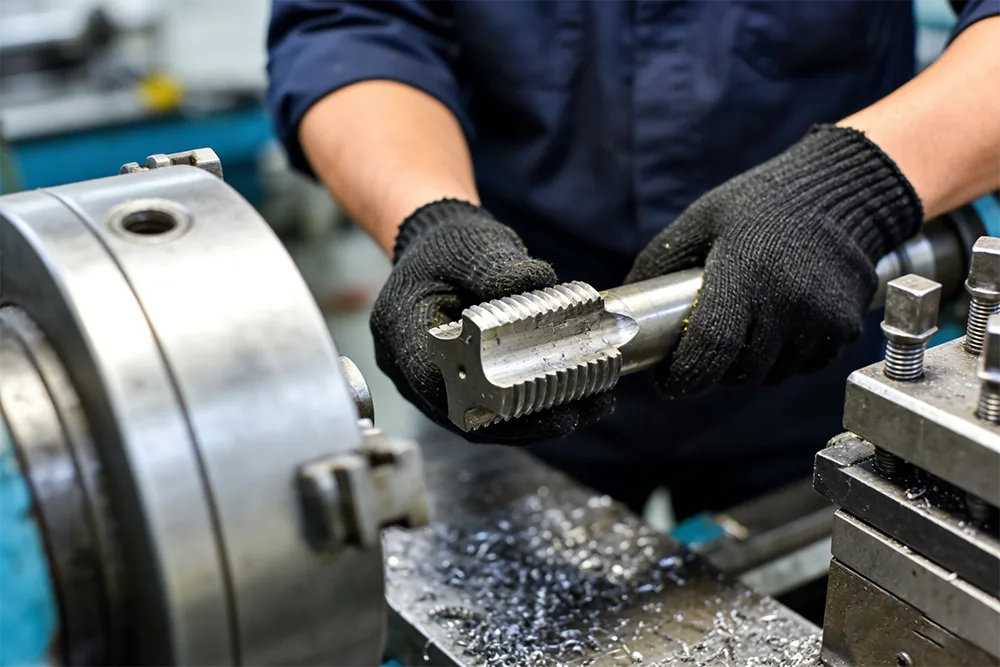
Automotive nut production usually involves several machining and forming stages. Tapping is performed after the required hole has been prepared and is responsible for creating the functional internal thread.
A typical process can be arranged as:
Nut forming or machining → Hole preparation → Automatic feeding → Thread tapping → Thread inspection → Sorting → Packaging
The tapping machine therefore has to work reliably as part of the overall production flow.
For automotive component suppliers, this is particularly important when large quantities of similar nuts need to be processed with limited manual intervention.
Different automotive nuts have different geometries, and their shapes directly affect how they should be fed and positioned.
Wheel Nuts
Wheel nuts require accurate internal threads because the finished component must engage correctly with the corresponding wheel stud. A dedicated automotive nut tapping machine can be configured for automatic feeding and continuous tapping according to the wheel nut dimensions.
Flange Nuts
The integrated flange changes the external profile of the nut and can affect feeding orientation. A suitable feeding system can be selected according to the flange diameter, nut height and overall shape.
Weld Nuts
Weld nuts are widely used where a permanent threaded fastening point needs to be incorporated into an automotive component. Projection weld nuts and other designs can be evaluated for automatic feeding and tapping.
Special Automotive Nuts
Automotive suppliers frequently work with non-standard components developed for specific assemblies. In these cases, the machine should be selected from the actual sample rather than from thread size alone.
For automotive fasteners, simply producing a thread is not enough. The finished thread needs to match the required specification so that the nut can assemble correctly with the mating component.
The tapping process can be monitored through machine parameters and, depending on the configuration, torque-related control.
Typical quality checks may include:
Thread gauge inspection
GO gauge checking
NO-GO gauge checking
Thread depth verification
Visual inspection
Tap condition monitoring
Finished-part sampling
Customers can provide their own automotive nut samples, taps and gauges for testing when required.
This allows the tapping process to be evaluated using the actual components rather than relying entirely on theoretical machine specifications.
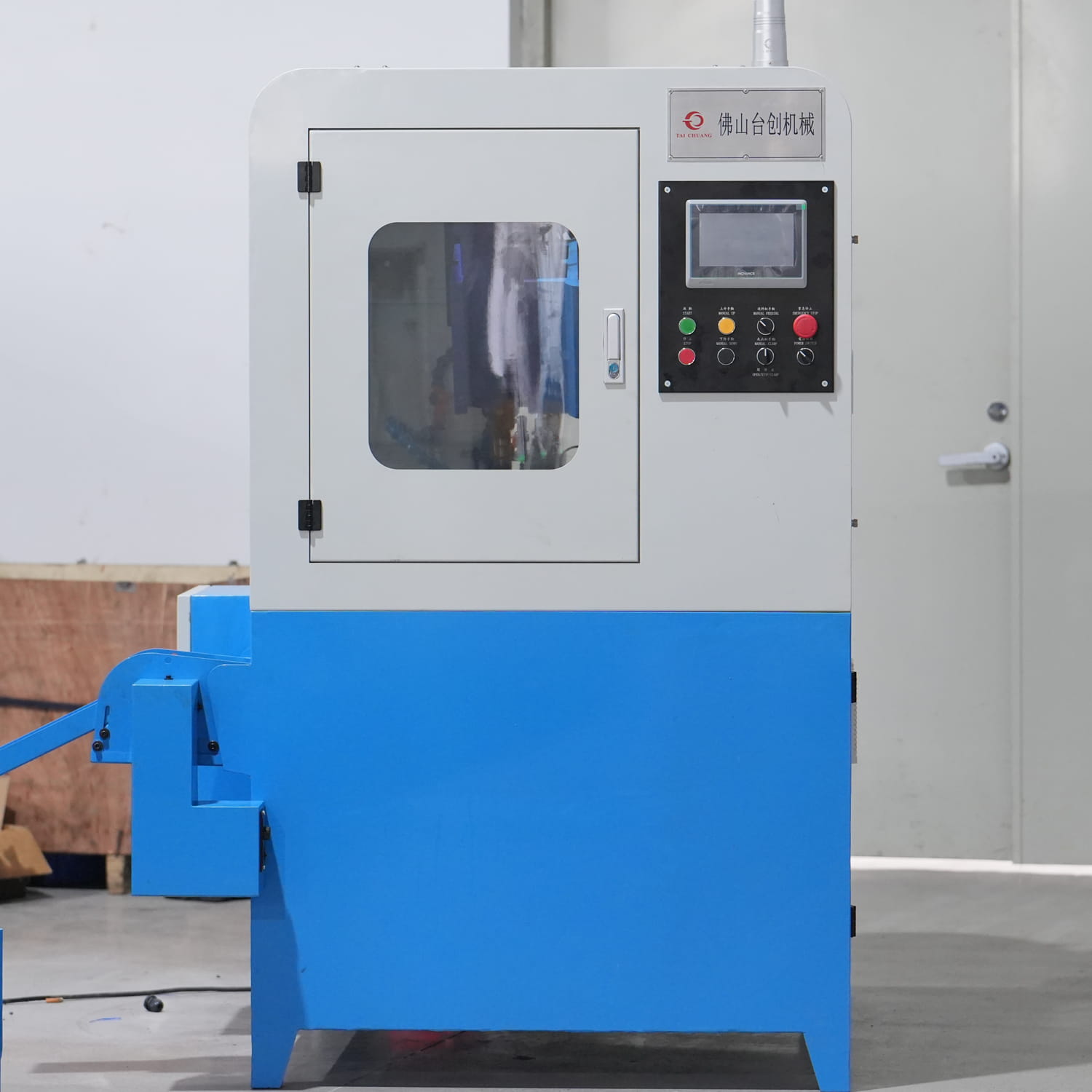
For a new automotive nut project, drawings provide important information, but physical samples can provide additional information that cannot always be seen on a drawing.
A sample-testing process can include:
Step 1 — Review the drawing
We check nut dimensions, thread specification, material and required tolerances.
Step 2 — Evaluate feeding
The sample is checked for orientation and feeding behavior.
Step 3 — Test the tapping process
The appropriate tap and tapping parameters are selected for testing.
Step 4 — Check the finished thread
GO/NO-GO gauges or other customer-specified inspection methods can be used.
Step 5 — Evaluate production requirements
The expected cycle and machine configuration are reviewed according to the customer's target output.
This approach is especially useful for special automotive fasteners.
Address
Building 1, Ruixin Technology Park, No. 206 of Xingye North Road, Shishan Town, Nanhai District, Foshan, Guangdong, China. 528225
Tel
If you have any enquiry about quotation or cooperation, please feel free to email us at sales03@gdtaichuang.cn or use the following inquiry form. Our sales representative will contact you within 24 hours. Thank you for your interest in our products.
Precision-Engineered Customization/Patent-Protected Innovation
Cost Savings: 30% average reduction vs. trading companies
Quality Control: Live video factory audits during production
Global Compliance Guarantee: Pre-verified for FDA/ISO/ROHS standards.