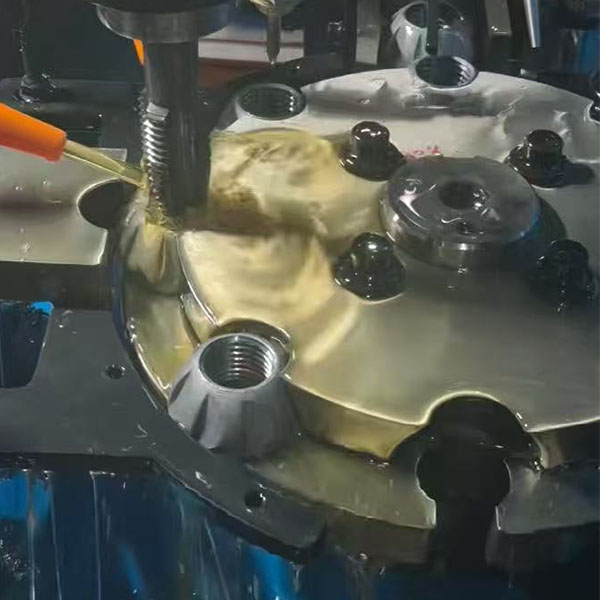
The straight grooves of straight-slot taps do not have the effect of chip removal; they merely provide a space for chips to accumulate. The limited size of the chip removal space determines the depth of the processed thread. Considering both the chip removal effect and the strength of the tap, the maximum processing depth of a straight-slot tap is generally twice the diameter depth. If the depth exceeds twice the diameter depth, a large amount of chips will accumulate, which will damage the thread quality and even break the tap. This is particularly significant in tapping with materials that are prone to sticking, such as stainless steel.
Chip removal:
Since the chip removal function of the straight-slot tap is not present, it is necessary for it to have a good chip removal effect. The straight-slot tap achieves chip removal by forming a chip-breaking groove between the rake face and the bottom of the slot, which breaks the chips into C-shaped or smaller curled shapes and accommodates them. Under a certain chip-breaking curvature, the better the plasticity of the material (i.e., the more flexible the material), the worse the chip removal effect. Conversely, the better the chip removal effect. This is the main reason why straight-slot taps are used for processing cast iron while helical-slot taps are preferred for processing stainless steel.
End mill
A wedge-shaped groove is cut at the head of the straight slot end mill to change the cutting cone shape, thereby pushing the chips forward for discharge. Therefore, it is generally only used for tapping through-hole threads.
Note:
This is similar to the chip-removal grooves of helical slot taps. The limited space of the chip-removal area determines the depth of the processed thread. The tip tap discharges the chips in the form of strips through the through hole.
Chip removal:
Since the chips produced by the tip-end tap are all in the form of strips and are completely discharged from the workpiece, there is less occurrence of iron chips getting stuck between the workpiece and the tap. It is necessary to ensure that the discharged iron chips do not accumulate at the bottom of the workpiece. When using the tip-end tap, the chips that have not been discharged from the bottom of the workpiece can also cause the tap to get stuck.
Spiral groove tap
The main components of a spiral groove tap are the helix angle, the chip-retaining groove, the rake angle and the clearance angle.
Comment:
The chip-removal grooves of a helical slot tap require a large space. The limited space for chip removal determines the depth of the threaded hole being machined. Moreover, the larger the chip-removal space is, the less the rigidity of the tap becomes.
Chip removal:
The structure of the tap itself is quite complex, with poor rigidity. Moreover, the travel distance for chip transmission is long, and the chips during tapping are in a strip-like form and are all discharged upward from the bottom of the workpiece. During the transmission in the helical groove, there is a tendency to get stuck, which can lead to chipping or breakage.
In summary, during the tapping process, the chip and the twist drill have a significant relationship. If the iron chips cannot be discharged, the twist drill cannot rotate, the motor keeps exerting force, and the twist drill will break due to excessive torque.
We use cookies to offer you a better browsing experience, analyze site traffic and personalize content. By using this site, you agree to our use of cookies. Privacy Policy